

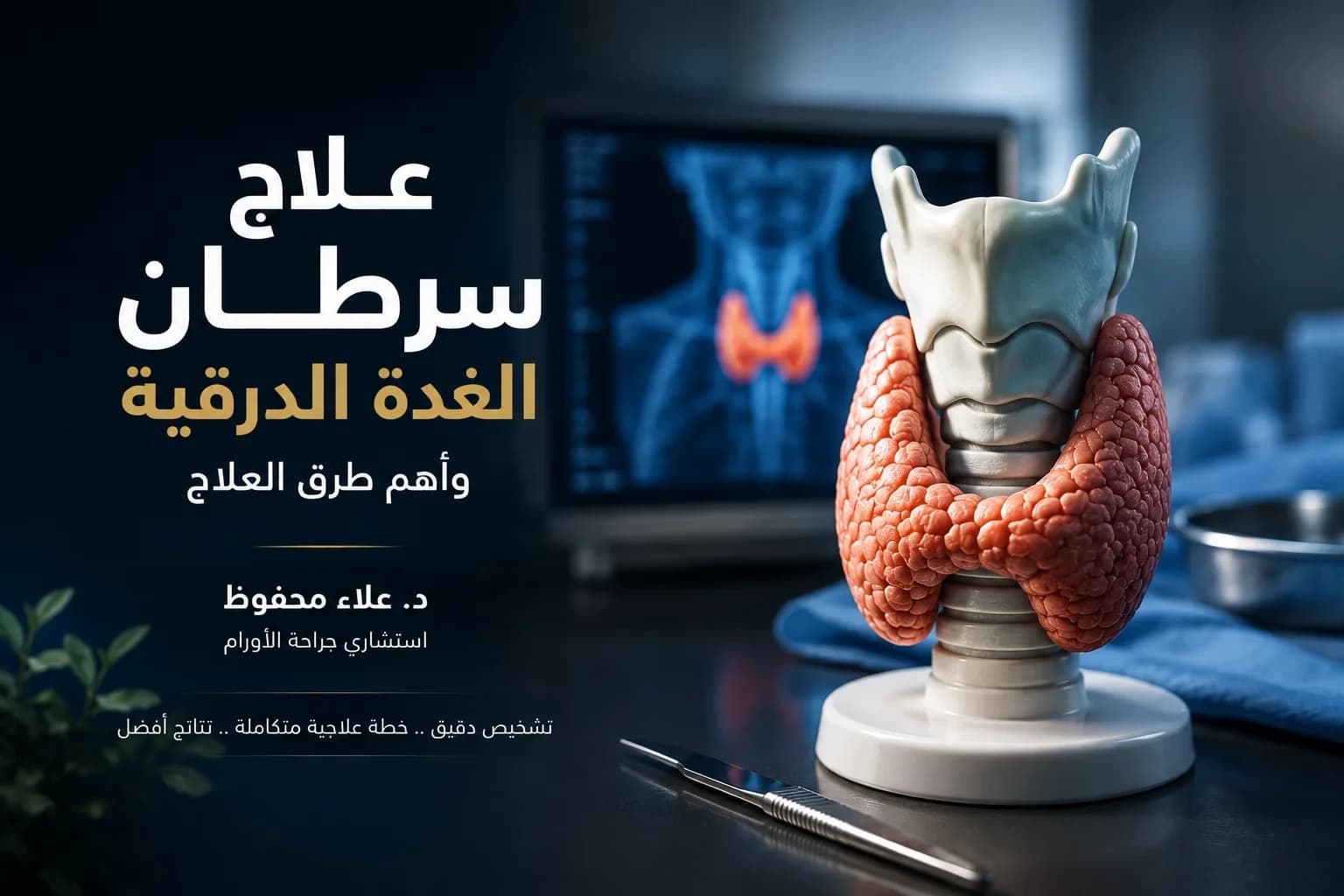
Thyroid cancer treatment varies from one patient to another depending on the type of tumor, its size, stage, and whether it has spread. Therefore, there is no single treatment plan that is suitable for all patients. Surgery may be the main treatment in many cases, while some patients may require radioactive iodine, medication, or active surveillance, particularly for certain small, low-risk tumors. Treatment selection depends on biopsy results, laboratory tests, imaging studies, tumor characteristics, and an assessment of the risk of recurrence. Common types such as papillary and follicular thyroid cancer often have favorable treatment outcomes in many cases.
Medical Disclaimer: This article is for educational purposes only and does not replace medical advice. The information is based on reliable medical sources, and the appropriate treatment for each patient should be determined after a thorough medical evaluation.
How Is Thyroid Cancer Treated?
Thyroid cancer treatment begins with determining the type of cancer and its level of risk rather than simply confirming the presence of a tumor in the thyroid gland. The doctor reviews the biopsy results, tumor size, location, possible spread to lymph nodes or surrounding tissues, and the patient’s overall health.
Based on this information, the treatment plan may include:
Active surveillance for certain small, low-risk tumors.
Removal of part or all of the thyroid gland.
Removal of affected lymph nodes when there is confirmed involvement or strong suspicion of spread.
Radioactive iodine treatment in suitable cases.
Drug therapy or radiation therapy in some advanced cases.
Recent recommendations indicate that treatment for certain low-risk thyroid cancers has become less aggressive than in the past, with greater emphasis on assessing the risk of recurrence when determining the extent of surgery and the need for additional treatments.
Papillary Thyroid Cancer Treatment
Papillary thyroid cancer is the most common type of thyroid cancer and often has favorable treatment outcomes, particularly when detected at an early stage. Treatment depends on the size and location of the tumor, its characteristics, and whether it has spread to the lymph nodes or beyond the thyroid gland.
Surgery for Papillary Thyroid Cancer
Removal of the thyroid lobe containing the tumor may be appropriate for some low-risk cases, while other patients may require complete removal of the thyroid gland. Affected lymph nodes may also be removed when tests or the surgeon’s evaluation indicate that the cancer has spread to them.
For some very small papillary thyroid tumors, active surveillance may be an appropriate medical option instead of immediate surgery, with regular follow-up through clinical examinations and ultrasound imaging.
Treatment of Malignant Thyroid Cancer
Malignant thyroid cancer means that cancerous cells are capable of growing and spreading, but treatment varies according to the type and stage of the cancer. Papillary and follicular thyroid cancers, for example, are managed differently from medullary thyroid cancer or more aggressive forms of the disease.
When the tumor can be surgically removed, surgery is usually an essential part of treatment. However, if the disease is advanced or has spread, the patient may require additional treatments determined by a specialized team in oncology, endocrinology, and surgery according to the nature of the condition.
It is important not to consider all malignant thyroid cancer cases as the same. Risk level and response to treatment can vary significantly from one patient to another, which is why treatment decisions should always be individualized.
Thyroid Cancer Surgery
Surgery is one of the most important treatment options for thyroid cancer. The procedure may involve partial or complete removal of the thyroid gland depending on the characteristics of the tumor.
Thyroid Lobectomy: This procedure involves removing the lobe containing the tumor and may be appropriate for certain small, low-risk thyroid cancers.
Total Thyroidectomy: This involves removing the entire thyroid gland and may be appropriate in certain cases when the tumor is larger, higher risk, or has other characteristics that require more extensive treatment.
Lymph Node Dissection: Lymph nodes are not necessarily removed for every patient. They are typically removed when there are affected lymph nodes or findings that support their removal.
Current recommendations show that total thyroidectomy is no longer an automatic procedure for every patient with low-risk thyroid cancer. More limited surgery may be sufficient for selected patients.
When Is Radioactive Iodine Used for Thyroid Cancer Treatment?
Radioactive iodine is one of the treatments used for certain cases of differentiated thyroid cancer, particularly some cases of papillary and follicular thyroid cancer. It works because thyroid cells and some thyroid cancer cells can absorb iodine, allowing radiation to target them.
Not every patient needs radioactive iodine after surgery. Some low-risk cases may not receive a clear benefit from it, while it may be more important when there is a higher risk of recurrence, remaining thyroid tissue, or cancer that can still absorb iodine.
The doctor determines whether radioactive iodine is needed after reviewing the surgical results, final pathology report, and overall risk level.
Hormone Therapy After Thyroid Removal
If the entire thyroid gland is removed, the patient usually needs thyroid hormone replacement to compensate for the hormones the gland can no longer produce. The doctor determines the appropriate dose based on the body’s needs. For some thyroid cancer patients, the dose may also be adjusted to reduce thyroid-stimulating hormone TSH levels according to the risk level of the disease.
After removal of only one thyroid lobe, some patients may not require permanent hormone therapy because the remaining part of the thyroid may continue producing sufficient hormones.
Treatment of Advanced Thyroid Cancer
When thyroid cancer spreads beyond the gland or becomes resistant to radioactive iodine, the treatment plan varies according to the cancer type, location of spread, rate of growth, and genetic changes present in the cancer cells.
Treatment options may include:
Surgery for disease that can be removed.
Radiation therapy in selected cases.
Targeted drug therapies.
Other systemic treatments for advanced or progressive disease.
Modern guidelines also recommend molecular testing in certain cases of advanced thyroid cancer that no longer respond to radioactive iodine. These tests can help identify suitable targeted drug treatments when available.
Follow-Up After Thyroid Cancer Treatment
The treatment journey does not end with surgery or radioactive iodine. Regular follow-up helps the doctor evaluate the response to treatment and detect any changes at an early stage.
Depending on the individual case, follow-up may include:
Clinical examinations.
Thyroid function and hormone tests.
Measurement of markers such as thyroglobulin when appropriate.
Neck ultrasound.
Additional tests when medically indicated.
The follow-up schedule varies from one person to another depending on the type and stage of cancer and the treatment received.
Book Your Consultation with Dr. Alaa Mahfouz to Determine Your Thyroid Cancer Treatment Plan
If you have been diagnosed with thyroid cancer, the most important next step is obtaining a specialized evaluation to determine the nature and risk level of the tumor before making treatment decisions. Not every patient requires complete removal of the thyroid gland, and not every patient needs radioactive iodine treatment.
You can contact Dr. Alaa Mahfouz, Consultant and Lecturer of Surgical Oncology at the National Cancer Institute – Cairo University, to review your test results and discuss the treatment options that may be suitable for your condition.
Frequently Asked Questions About Thyroid Cancer Treatment
Is Thyroid Cancer Curable?
Yes. Many cases of thyroid cancer, particularly papillary and follicular thyroid cancer, have excellent treatment outcomes, and the chances of cure are high in many early-stage cases. However, the prognosis varies depending on the type and stage of the cancer, the extent of spread, and response to treatment.
Does Every Thyroid Cancer Patient Need Surgery?
No. In some very small, low-risk papillary thyroid cancers, active surveillance may be an appropriate option. Other cases may require removal of part or all of the thyroid gland. The doctor determines the best option based on the characteristics of the tumor.
Is Radioactive Iodine Necessary After Thyroid Cancer Surgery?
Not necessarily. Radioactive iodine is used when it is expected to provide a benefit, such as in some patients with a higher risk of recurrence or those with remaining thyroid or cancer cells capable of absorbing iodine. Some low-risk cases may not require it.
Can Thyroid Cancer Be Treated Without Removing the Entire Thyroid?
Yes. In certain cases, removing only the affected thyroid lobe may be sufficient, particularly for some small, low-risk tumors. Active surveillance may also be an option for certain very small tumors. The decision depends on the specific characteristics of the tumor rather than the diagnosis alone.
Can Thyroid Cancer Return After Treatment?
Thyroid cancer can return in some patients, which is why follow-up continues after treatment. The risk of recurrence varies according to the type, size, stage, characteristics, extent of spread, and response to treatment. Therefore, the doctor develops a follow-up plan tailored to each patient’s condition.
