

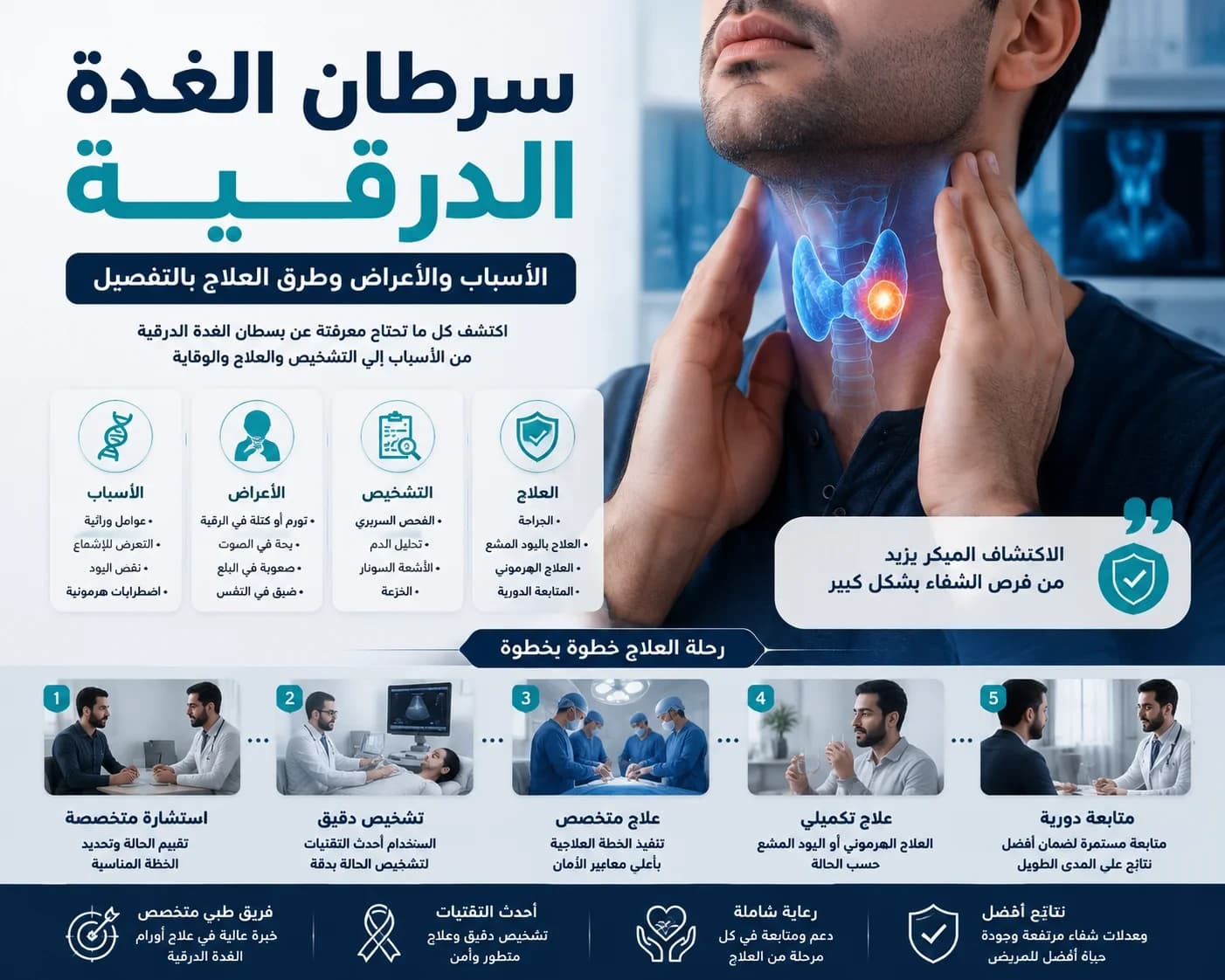
Thyroid cancer is one of the cancers that affects the thyroid gland, a small butterfly-shaped gland located at the front of the neck. The thyroid gland plays an essential role in producing hormones that regulate metabolism, energy levels, and many important body functions.
Although some types of thyroid cancer grow slowly and have high treatment success rates when detected early, accurate diagnosis and choosing the right treatment plan are important factors in achieving the best possible outcomes. Understanding thyroid cancer symptoms, causes, types, and available treatments can help patients recognize warning signs and seek appropriate medical care.
Medical Disclaimer: This article has been reviewed by Dr. Alaa Mahfouz, Consultant and Lecturer of Surgical Oncology at the National Cancer Institute – Cairo University, to ensure the accuracy and reliability of the medical information provided.
What Is Thyroid Cancer?
Thyroid cancer occurs when abnormal cells begin to grow uncontrollably inside the thyroid gland, forming a tumor. In some cases, the tumor remains limited to the thyroid gland, while in other cases it may spread to nearby tissues or lymph nodes in the neck.
The thyroid gland contains different types of cells, which is why thyroid cancers vary depending on the type of cell where the cancer begins. Many thyroid nodules are benign and do not indicate cancer, but some nodules require medical evaluation to determine their nature.
Thyroid cancer is often discovered when a person notices a lump in the neck or during imaging tests performed to evaluate thyroid problems. Early diagnosis plays an important role in selecting the most suitable treatment approach.
Types of Thyroid Cancer
There are several types of thyroid cancer, and each type differs in its growth pattern, behavior, and response to treatment.
Papillary Thyroid Cancer
Papillary thyroid cancer is the most common type of thyroid cancer. It usually develops slowly and often responds well to treatment, especially when diagnosed at an early stage.
Although it may spread to lymph nodes in the neck, many patients achieve excellent outcomes with proper treatment and regular follow-up.
Follicular Thyroid Cancer
Follicular thyroid cancer develops from follicular cells responsible for producing thyroid hormones. Compared with papillary thyroid cancer, it has a greater tendency to spread through blood vessels to other areas of the body.
Treatment decisions depend on the size of the tumor, its spread, and the overall condition of the patient.
Medullary Thyroid Cancer
Medullary thyroid cancer develops from specialized thyroid cells called parafollicular cells. Some cases may be associated with inherited genetic conditions, which means genetic evaluation may be recommended for certain patients.
Anaplastic Thyroid Cancer
Anaplastic thyroid cancer is a rare but aggressive type of thyroid cancer. It tends to grow quickly and may require urgent medical intervention and a specialized treatment plan due to its rapid progression.
Thyroid Cancer Symptoms
In the early stages, thyroid cancer may not cause noticeable symptoms. However, as the tumor grows, some signs may appear, including:
A lump or swelling in the front of the neck.
Persistent neck pain that may extend toward the ear.
Difficulty swallowing or a feeling that something is stuck in the throat.
Persistent hoarseness or changes in voice.
Difficulty breathing due to pressure on the airway.
Enlarged lymph nodes in the neck.
Having these symptoms does not always mean a person has thyroid cancer, but they should be evaluated by a specialist to determine the underlying cause.
Causes of Thyroid Cancer
The exact causes of thyroid cancer are not always clear. However, several factors may increase the risk of developing the disease, including:
Previous exposure to high levels of radiation, especially in the head and neck area.
A family history of thyroid cancer or certain inherited genetic syndromes.
Genetic changes that affect thyroid cell growth.
Some thyroid conditions that may be associated with an increased risk of certain thyroid tumors.
It is important to note that thyroid cancer can occur in people without obvious risk factors, which makes paying attention to unusual symptoms and regular medical evaluation important.
Is Thyroid Cancer Dangerous?
Many people ask, “Is thyroid cancer dangerous?” The answer depends on several factors, including the type of cancer, its stage, tumor size, and whether it has spread to other areas.
Some common types, such as papillary and follicular thyroid cancer, often have favorable outcomes, especially when diagnosed early and treated appropriately.
However, less common types, such as anaplastic thyroid cancer, can be more aggressive and require advanced treatment approaches.
The severity of thyroid cancer cannot be determined by the diagnosis alone. A complete evaluation by a specialized medical team is necessary to understand the condition and develop the most appropriate treatment plan.
Diagnosis of Thyroid Cancer
Diagnosing thyroid cancer usually involves several steps to identify the nature of the thyroid abnormality and determine the extent of the disease, including:
Physical examination of the neck and thyroid gland.
Thyroid ultrasound imaging.
Fine needle aspiration biopsy when needed.
Blood tests and additional evaluations.
Imaging tests to assess possible spread of the tumor.
Accurate diagnosis helps doctors select the appropriate treatment and improve long-term outcomes.
Thyroid Cancer Treatment
The choice of thyroid cancer treatment depends on several factors, including the type of cancer, tumor size, stage, and the patient’s general health condition.
Surgery
Surgery is one of the main treatments for thyroid cancer. Depending on the case, it may involve removing part of the thyroid gland or removing the entire gland.
In some situations, nearby lymph nodes may also be removed if there is evidence that the cancer has spread.
Radioactive Iodine Therapy
Radioactive iodine therapy is used for certain types of thyroid cancer after surgery. It helps destroy remaining thyroid cells or cancer cells that absorb iodine.
The decision to use radioactive iodine depends on the characteristics of the tumor and the patient’s individual condition.
Targeted Therapy and Medical Treatments
Some advanced thyroid cancers may require targeted therapies or other medications designed to control tumor growth and manage the disease.
The treatment plan is customized according to each patient’s diagnosis and response to previous treatments.
When Should You See an Oncology Surgeon?
You should consult a specialized doctor if you notice a lump in your neck, persistent voice changes, difficulty swallowing, or abnormal thyroid test results.
Patients diagnosed with thyroid cancer may also benefit from evaluation by an oncology surgeon to determine the most suitable surgical approach and treatment plan.
Choosing an experienced specialist helps ensure accurate diagnosis and personalized care based on the latest medical standards.
Book Your Consultation with Dr. Alaa Mahfouz
If you have symptoms related to the thyroid gland or have been diagnosed with thyroid cancer and need specialized medical evaluation, you can contact Dr. Alaa Mahfouz, Consultant and Lecturer of Surgical Oncology at the National Cancer Institute – Cairo University.
Dr. Alaa Mahfouz provides specialized care based on accurate diagnosis, advanced surgical techniques, and a personalized treatment approach for each patient.
Frequently Asked Questions
Is thyroid cancer curable?
Yes, many cases of thyroid cancer can be treated successfully, especially when diagnosed early and managed with the appropriate treatment plan.
What are the first signs of thyroid cancer?
The first signs may include a neck lump, enlarged lymph nodes, voice changes, or difficulty swallowing. However, some patients may have no noticeable symptoms in the early stages.
Is thyroid cancer surgery dangerous?
Thyroid surgery is a common procedure, and its risks depend on several factors, including the patient’s condition, tumor characteristics, and the surgeon’s experience.
Can thyroid cancer come back after treatment?
Yes, thyroid cancer can return in some cases, which is why regular follow-up after treatment is an important part of long-term care.
What is the survival rate for thyroid cancer?
The survival rate varies depending on the type of thyroid cancer, stage of diagnosis, and other patient-related factors. Early diagnosis and appropriate treatment generally improve outcomes.
