

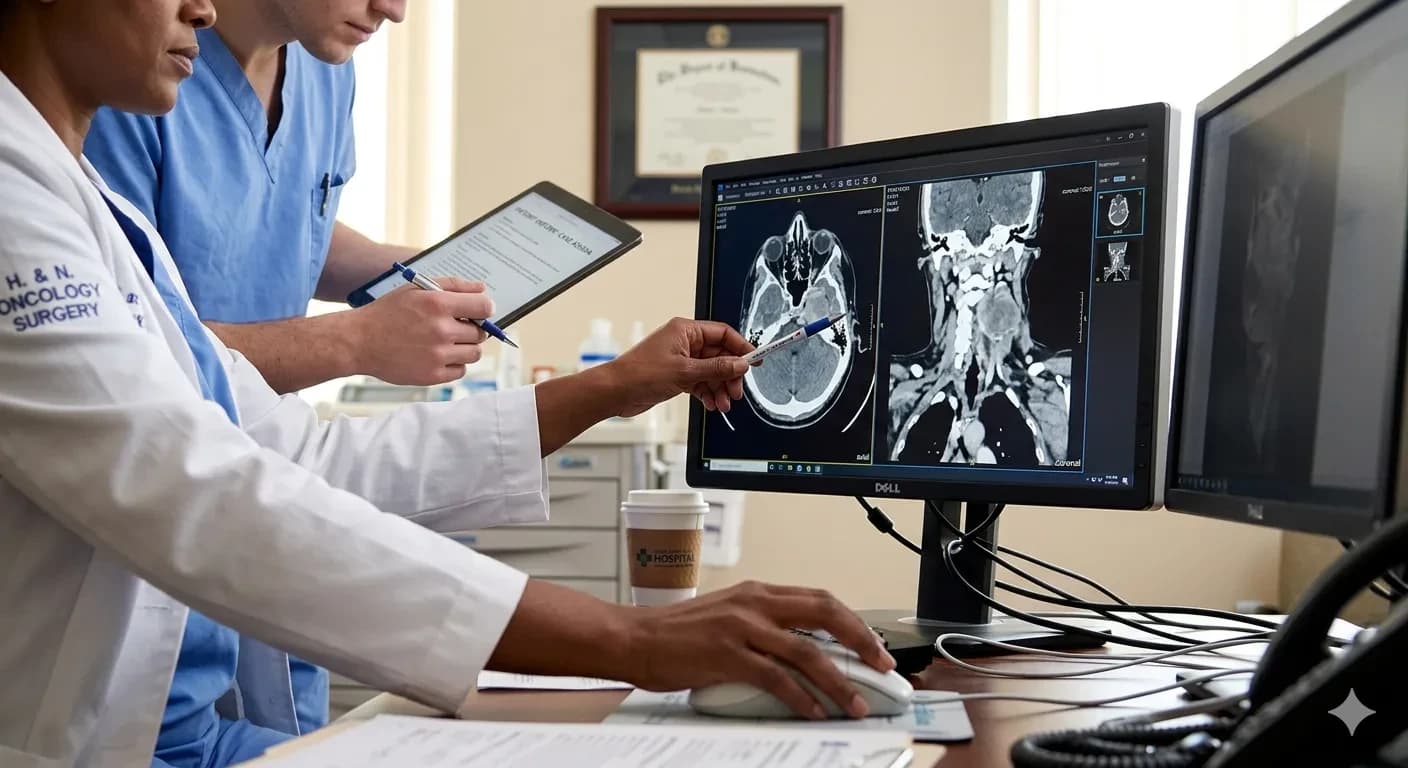
Head and neck tumors are among the most delicate and challenging cancers to treat surgically. These tumors can affect critical areas including the mouth, tongue, throat, thyroid gland, salivary glands, jaw, and neck tissues. Because these regions are closely connected to essential functions such as speaking, swallowing, breathing, and facial movement, every surgical decision requires exceptional precision and experience.
Successful treatment is not only about removing the tumor. The true challenge lies in achieving complete cancer control while preserving the patient’s quality of life as much as possible. This is where specialized surgical oncology plays a crucial role.
Dr. Alaa Mahfouz has extensive experience in advanced and complex oncologic surgeries, managing cases that require meticulous planning and highly specialized surgical techniques. Through years of academic and clinical practice in leading oncology institutions, he has participated in treating a wide range of head and neck tumors using modern evidence-based surgical approaches.
The treatment journey usually begins with a detailed evaluation of the patient’s condition. Advanced imaging studies, pathology reports, and multidisciplinary discussions help determine the exact size and spread of the tumor. Every patient is different, which means every treatment plan must be carefully tailored according to the type of tumor, its stage, and the patient’s overall health condition.
One of the most important aspects of head and neck cancer surgery is balancing radical tumor removal with functional preservation. In many cases, preserving speech, swallowing ability, and facial appearance can significantly improve the patient’s psychological and social well-being after surgery. This requires not only surgical skill, but also deep understanding of anatomy and reconstructive techniques.
Modern surgical oncology has evolved dramatically in recent years. Advanced technologies and microsurgical techniques now allow surgeons to perform highly precise procedures while minimizing complications and improving recovery outcomes. In selected cases, microscopic reconstruction techniques may be used to restore tissues affected after tumor removal, helping patients regain both function and confidence.
Head and neck tumors may present with symptoms such as persistent neck swelling, difficulty swallowing, chronic sore throat, voice changes, unexplained mouth ulcers, or enlarged lymph nodes. Early medical evaluation is extremely important because early diagnosis often increases treatment success rates and may reduce the extent of surgery required.
Another critical factor in successful treatment is the integration between surgery and other cancer therapies. Many patients may require chemotherapy, radiotherapy, or combined treatment protocols. Coordinated care between oncology specialties ensures that the patient receives the most effective and comprehensive treatment plan possible.
For patients facing recurrent or advanced tumors, surgical expertise becomes even more important. Complex recurrent cases often require careful surgical planning due to previous operations or radiation exposure. Managing these situations safely requires extensive oncologic experience and advanced technical capability.
Beyond the operating room, patient care continues throughout every stage of recovery. Proper follow-up, nutritional support, rehabilitation, and continuous monitoring are essential parts of successful cancer treatment. Personalized medical care helps patients feel supported and reassured during a difficult journey.
Choosing the right surgical oncologist can make a major difference in both treatment outcomes and long-term quality of life. Experience, scientific knowledge, and attention to every detail are all essential when dealing with complex oncologic surgeries.
With specialized expertise in advanced tumor surgery, Dr. Alaa Mahfouz is committed to providing precise, evidence-based surgical care focused on achieving the best possible outcomes for every patient.
