

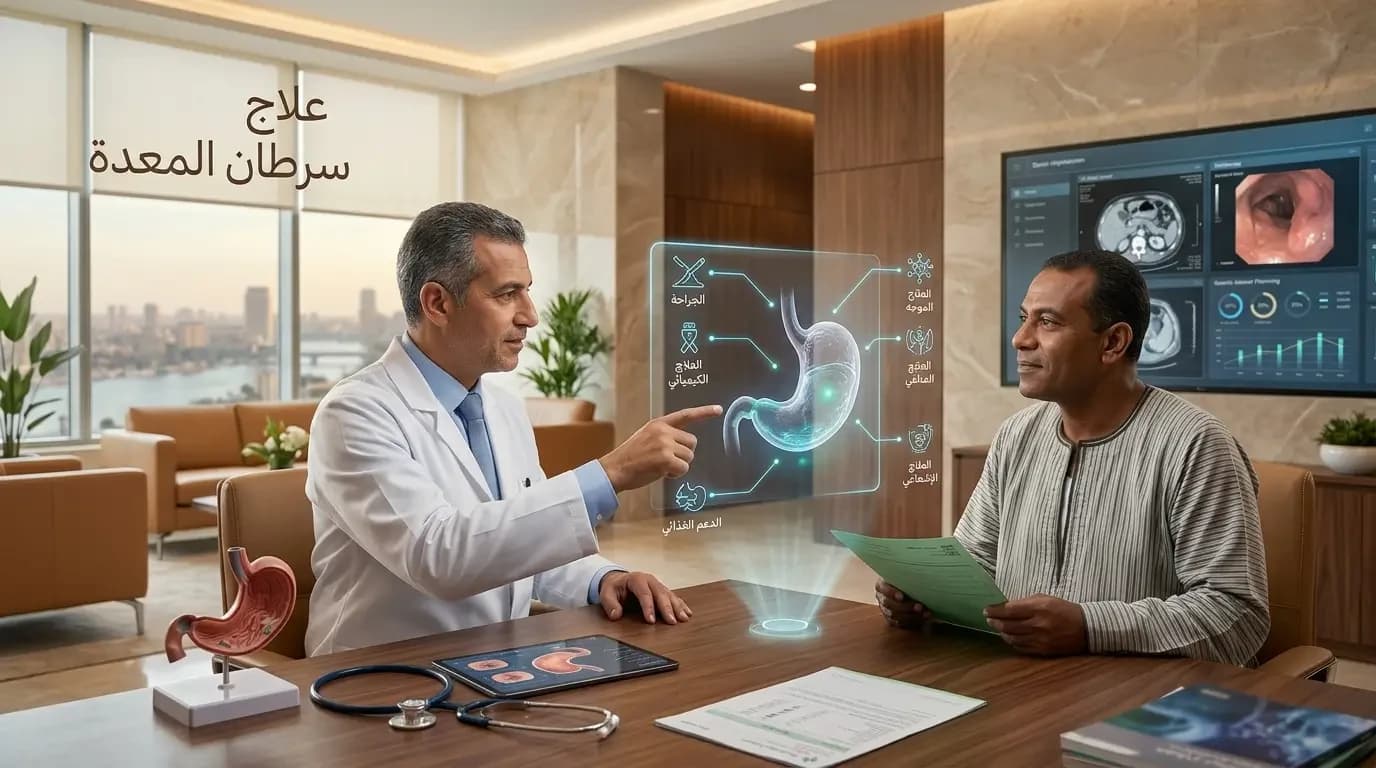
Stomach cancer is a condition that requires an accurate diagnosis and a personalized treatment plan tailored to each patient's needs. Thanks to significant advances in cancer diagnosis and treatment, the chances of controlling the disease have improved considerably, especially when it is detected at an early stage. The choice of treatment depends on several factors, including the type of cancer, its stage, the patient's overall health, and whether the cancer has spread.
If you are looking for reliable information about stomach cancer treatment, this guide explains the most common treatment options, when each one is used, and what patients can expect throughout their treatment journey.
What Is Stomach Cancer?
Stomach cancer, also known as gastric cancer, occurs when abnormal cells develop in the lining of the stomach and begin to grow uncontrollably. Over time, these cancer cells may invade nearby tissues or spread to other parts of the body if left untreated.
Although stomach cancer often develops slowly over several years, early detection significantly increases the chances of successful treatment and provides more effective treatment options.
When Does Stomach Cancer Treatment Begin?
Treatment begins after completing a comprehensive evaluation to determine the exact stage of the disease. This evaluation typically includes:
Upper gastrointestinal endoscopy with a biopsy.
CT scan.
Blood tests.
PET scan in selected cases.
Assessment of the patient's overall health.
Once the stage of the cancer has been confirmed, the medical team develops a personalized treatment plan that may include surgery, chemotherapy, radiation therapy, targeted therapy, immunotherapy, or a combination of these treatments.
Treatment for Malignant Stomach Cancer
Malignant stomach cancer refers to cancerous tumors that have the ability to grow and spread to surrounding tissues or distant organs.
The treatment approach depends on the stage of the disease and may involve one or more of the following options.
Surgery
If the tumor is confined to the stomach and can be completely removed, surgery is often considered the primary treatment.
Surgical procedures may include:
Partial gastrectomy (removal of part of the stomach).
Total gastrectomy (removal of the entire stomach).
Removal of nearby lymph nodes.
The goal of surgery is to completely remove the cancer while preserving as much digestive function as possible.
Chemotherapy
Chemotherapy uses anti-cancer medications to destroy cancer cells or shrink tumors.
It may be administered:
Before surgery to reduce tumor size.
After surgery to lower the risk of recurrence.
As the main treatment for advanced-stage stomach cancer.
The type of chemotherapy drugs and the number of treatment cycles depend on each patient's condition.
Radiation Therapy
Radiation therapy uses high-energy radiation to destroy cancer cells.
It is sometimes combined with chemotherapy or given after surgery to reduce the likelihood of cancer recurrence.
Targeted Therapy
Targeted therapy focuses on specific proteins or genetic changes within cancer cells, allowing treatment to attack cancer more precisely while minimizing damage to healthy cells.
This treatment is only suitable for patients whose tumors have specific molecular targets identified through specialized laboratory testing.
Immunotherapy
Immunotherapy helps the body's immune system recognize and attack cancer cells more effectively.
It is used in certain cases of advanced stomach cancer, particularly when testing shows that the patient is likely to benefit from this type of treatment.
Can Stomach Cancer Be Cured?
The likelihood of recovery depends on several important factors, including:
The stage at which the cancer is diagnosed.
Tumor size.
Whether the cancer has spread.
The patient's response to treatment.
Overall health condition.
When stomach cancer is detected early, the chances of successful treatment are significantly higher. In advanced stages, treatment is primarily aimed at controlling the disease, relieving symptoms, and improving quality of life.
When Is Surgery the Best Treatment Option?
Surgery is generally the preferred treatment when the tumor can be completely removed and has not spread to distant organs.
In some cases, chemotherapy is recommended before surgery to shrink the tumor and improve the likelihood of successful surgical removal.
What Happens After Stomach Removal Surgery?
After a partial or total gastrectomy, patients need time to adjust to a new way of eating.
Doctors usually recommend:
Eating small, frequent meals.
Chewing food thoroughly.
Consuming adequate amounts of protein.
Monitoring body weight regularly.
Taking nutritional supplements if prescribed.
With proper nutritional support and follow-up care, many patients gradually return to their normal daily activities.
Can Stomach Cancer Return After Treatment?
Although treatment may successfully eliminate the cancer, recurrence is still possible in some patients.
For this reason, regular follow-up appointments are essential and may include:
Physical examinations.
Imaging scans.
Blood tests.
Endoscopy when necessary.
Routine monitoring allows doctors to detect any recurrence as early as possible.
Symptoms That Require Immediate Medical Attention
During or after treatment, patients should contact their healthcare provider immediately if they experience:
Rapid, unexplained weight loss.
Persistent vomiting.
Difficulty swallowing.
Gastrointestinal bleeding.
Severe abdominal pain.
Ongoing weakness or fatigue.
Prompt medical evaluation can help manage complications before they become more serious.
How Is the Best Treatment for Stomach Cancer Chosen?
There is no single treatment plan that works for every patient. Treatment decisions are based on several factors, including:
The type of stomach cancer.
The stage of the disease.
The patient's age.
Existing medical conditions.
Results of molecular or genetic testing when appropriate.
The patient's ability to tolerate treatment.
Treatment planning is typically carried out by a multidisciplinary team that includes surgical oncologists, medical oncologists, radiation oncologists, radiologists, and pathologists.
Important Tips During Stomach Cancer Treatment
Following healthy habits throughout treatment can improve recovery and overall well-being. Patients are encouraged to:
Follow a nutrition plan recommended by their physician or dietitian.
Stay well hydrated.
Avoid smoking.
Get enough rest.
Engage in light physical activity when medically appropriate.
Attend all treatment and follow-up appointments.
Inform their healthcare team about any new symptoms or side effects.
in the end Stomach cancer treatment depends on an accurate diagnosis, the stage of the disease, and the patient's overall health. Because every case is unique, treatment plans are individualized and may include surgery, chemotherapy, radiation therapy, targeted therapy, immunotherapy, or a combination of these approaches.
Early diagnosis remains the most important factor in improving treatment outcomes and reducing complications. If you experience persistent symptoms such as ongoing stomach pain, unexplained weight loss, difficulty swallowing, or other concerning digestive symptoms, consult a healthcare professional promptly for appropriate evaluation and diagnosis.
Frequently Asked Questions About Stomach Cancer Treatment
What is the best treatment for stomach cancer?
The best treatment depends on the stage of the cancer and the patient's overall health. It may include surgery, chemotherapy, radiation therapy, targeted therapy, immunotherapy, or a combination of these treatments.
Can stomach cancer be treated with surgery alone?
Yes, in some early-stage cases surgery alone may be sufficient. However, many patients benefit from chemotherapy or radiation therapy before or after surgery to reduce the risk of recurrence.
How long does stomach cancer treatment take?
The duration varies depending on the treatment plan. It may last several months and often includes surgery, systemic therapy, and regular follow-up care.
Is chemotherapy necessary for every stomach cancer patient?
No. The need for chemotherapy depends on the stage of the disease, pathology results, and the recommendations of the treating oncology team.
Can patients live a normal life after stomach removal surgery?
Yes. Most patients can gradually adapt to dietary changes and return to their normal daily routines with appropriate nutritional guidance, medical follow-up, and lifestyle adjustments.
