

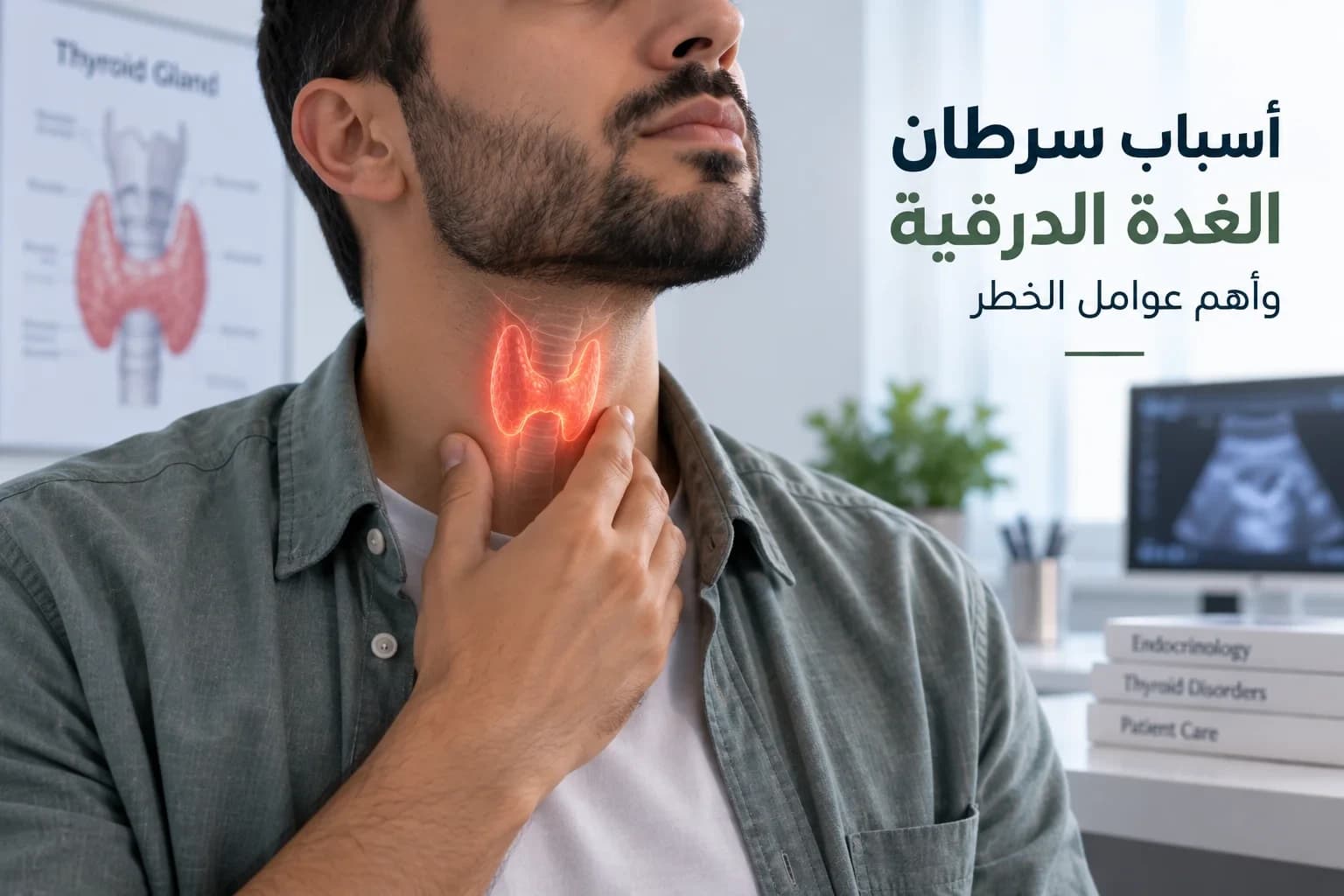
Thyroid cancer is a type of tumor that may begin in the cells of the thyroid gland located at the front of the neck. Its nature and growth rate can vary depending on the type of cells from which it originated. Although doctors know some factors that increase the likelihood of developing thyroid cancer, the direct cause of most cases is not clearly known. Cancer develops when changes occur in the DNA of thyroid cells, causing them to grow and divide abnormally. Therefore, it is important to distinguish between the direct cause of the disease and the risk factors that may increase the likelihood of developing it.
Medical Disclaimer: This article was medically reviewed by Dr. Alaa Mahfouz, Consultant and Lecturer of Oncology Surgery at the National Cancer Institute, Cairo University.
What Are the Causes of Thyroid Cancer?
To date, there is no single cause responsible for all cases of thyroid cancer. The disease begins when changes or mutations occur in the DNA of thyroid cells, which may cause the cells to grow and divide abnormally and continue to survive instead of being eliminated at the normal time. As these cells accumulate, a tumor may form.
The presence of a particular risk factor does not mean that a person will necessarily develop cancer. The disease can also occur in people who have no clear risk factors. Therefore, factors such as diet, stress, or lifestyle cannot be considered direct causes of all cases of thyroid cancer.
What Are the Risk Factors for Thyroid Cancer?
There are several factors associated with an increased likelihood of developing thyroid cancer, but they do not mean that cancer will definitely develop. The most notable factors include:
Exposure to high levels of radiation, especially to the head and neck area.
A family history of thyroid cancer.
Certain genetic syndromes and inherited conditions.
A history of thyroid enlargement or goiter.
Female sex, as thyroid cancer is diagnosed more frequently in women than in men.
Certain factors related to age, weight, and previous patterns of radiation exposure.
The importance of each factor varies depending on the type of thyroid cancer and the individual's medical history.
Does Radiation Exposure Cause Thyroid Cancer?
Exposure to high doses of radiation, especially during childhood, is one of the most important known risk factors for thyroid cancer. This includes radiation therapy to the head or neck to treat other diseases, as well as certain types of radiation exposure resulting from nuclear accidents. This factor becomes more significant when exposure occurs at a young age or involves high doses.
At the same time, there is no need to fear necessary medical tests that use radiation. Diagnostic imaging involves much lower doses than those associated with radiation therapy, and the doctor determines whether such tests are necessary based on the patient's condition.
Is Thyroid Cancer Hereditary?
Some types of thyroid cancer can be associated with genetic factors, but this does not apply to all cases. The genetic association is particularly notable in some cases of medullary thyroid cancer, which may be part of hereditary syndromes such as multiple endocrine neoplasia type 2, which is associated with changes in the RET gene.
Having a first-degree relative with thyroid cancer may also increase the likelihood of developing the disease. However, most people with thyroid cancer do not have a clear family history of the disease. Therefore, discussing family medical history with a doctor may be important, especially when there is more than one case of thyroid cancer within the family.
Is Iodine Deficiency One of the Causes of Thyroid Cancer?
The relationship between iodine and thyroid cancer is not simple, and iodine deficiency cannot be considered a direct cause of cancer. Medical data indicate that low dietary iodine intake has been associated with a higher prevalence of certain types of follicular thyroid cancer in some regions, while higher iodine intake may be associated with an increased likelihood of some cases of papillary thyroid cancer.
Therefore, iodine supplements or changes in dietary iodine intake should not be used to prevent thyroid cancer without a clear medical reason. Iodine requirements vary according to health status, age, pregnancy, and certain thyroid disorders, and the doctor is best qualified to determine what the patient needs.
Does an Enlarged Thyroid Cause Cancer?
An enlarged thyroid or the presence of thyroid nodules does not necessarily mean that cancer is present. Most thyroid nodules are benign, but certain nodules may require evaluation to determine their nature, particularly if they are growing or are accompanied by voice changes, difficulty swallowing, or swelling in the neck.
According to sources from the National Cancer Institute, a history of thyroid enlargement is one of the factors associated with an increased risk of thyroid cancer. Therefore, a new lump or enlargement in the neck should not be ignored. It is better to have it medically evaluated rather than attempting to determine its nature based on symptoms alone.
Is Thyroid Cancer More Common in Women?
Yes. Thyroid cancer is more common in women than in men, and medical sources indicate that women are approximately three times more likely to develop the disease. The full reason for this difference remains unclear, although hormonal factors have been suggested as a possible explanation.
The likelihood of developing thyroid cancer also varies according to age and the type of thyroid cancer. Papillary thyroid cancer, which is the most common type, can occur at different ages but is frequently diagnosed in younger adults compared with some other types.
What Are the Symptoms of Thyroid Cancer?
Thyroid cancer may not cause noticeable symptoms in its early stages. As a result, some cases may be discovered during a neck examination or imaging performed for another reason. As the tumor grows, certain signs may appear that require medical evaluation, including:
A lump or nodule in the neck.
Swollen lymph nodes in the neck.
Persistent hoarseness or voice changes.
Difficulty swallowing.
Pain in the neck or throat.
A feeling of pressure or tightness in the neck.
These symptoms do not necessarily indicate cancer, as they can also occur due to benign conditions or other thyroid disorders. However, persistent symptoms or the appearance of a new lump should be evaluated by a doctor to determine the cause.
Can Thyroid Cancer Be Prevented?
There is no way to guarantee the prevention of most cases of thyroid cancer because the direct cause of the genetic changes responsible for most cases is unknown. However, some known risk factors can be reduced, particularly unnecessary exposure to high doses of radiation, especially to the head and neck area.
People with known genetic syndromes that increase the risk of thyroid cancer may require more specialized monitoring and genetic counseling. Preventive measures may vary depending on the type of syndrome and the affected gene.
When Should You See an Oncology Surgeon?
You should see a doctor if you notice a new lump in the neck, an increase in the size of a known thyroid nodule, persistent hoarseness, difficulty swallowing, or swollen lymph nodes. These signs do not necessarily indicate cancer, but they require evaluation to determine their cause.
The evaluation usually begins with a medical examination and may include blood tests and an ultrasound of the thyroid gland, followed by other tests depending on the nature of the condition and the examination results. If a suspicious nodule is found, the doctor determines the appropriate steps to reach an accurate diagnosis.
Book Your Consultation with Dr. Alaa Mahfouz to Evaluate Thyroid Changes
If you notice a lump in your neck, have a thyroid nodule, or experience persistent symptoms that cause concern, early medical evaluation can help determine the nature of the condition and identify the appropriate next step. Having a thyroid nodule or enlargement does not mean that you have cancer, but an accurate diagnosis is the right way to gain reassurance or begin treatment when necessary.
You can contact Dr. Alaa Mahfouz, Consultant and Lecturer of Oncology Surgery at the National Cancer Institute, Cairo University, to evaluate your condition and discuss the appropriate tests and treatment steps based on the diagnosis.
Frequently Asked Questions About the Causes of Thyroid Cancer
What Are the Causes of Thyroid Cancer?
There is no single known cause for most cases of thyroid cancer. The disease develops as a result of changes in the DNA of thyroid cells, while certain factors may increase the risk, such as high radiation exposure, family history, and some genetic syndromes.
Is Thyroid Cancer Hereditary?
Some types of thyroid cancer can be associated with genetic factors, particularly certain cases of medullary thyroid cancer. However, most cases are not associated with a clear family history of the disease.
Does Iodine Deficiency Cause Thyroid Cancer?
Iodine deficiency cannot be considered a direct cause of all cases of thyroid cancer. There is a relationship between iodine levels and the prevalence of certain types of thyroid cancer. Therefore, iodine supplements should not be taken on your own for the purpose of prevention.
Does a Thyroid Nodule Mean Cancer Is Present?
No. Most thyroid nodules are benign, but some nodules require medical evaluation and imaging, and some may require a biopsy depending on their characteristics. Therefore, having a thyroid nodule alone does not mean that a person has thyroid cancer.
