

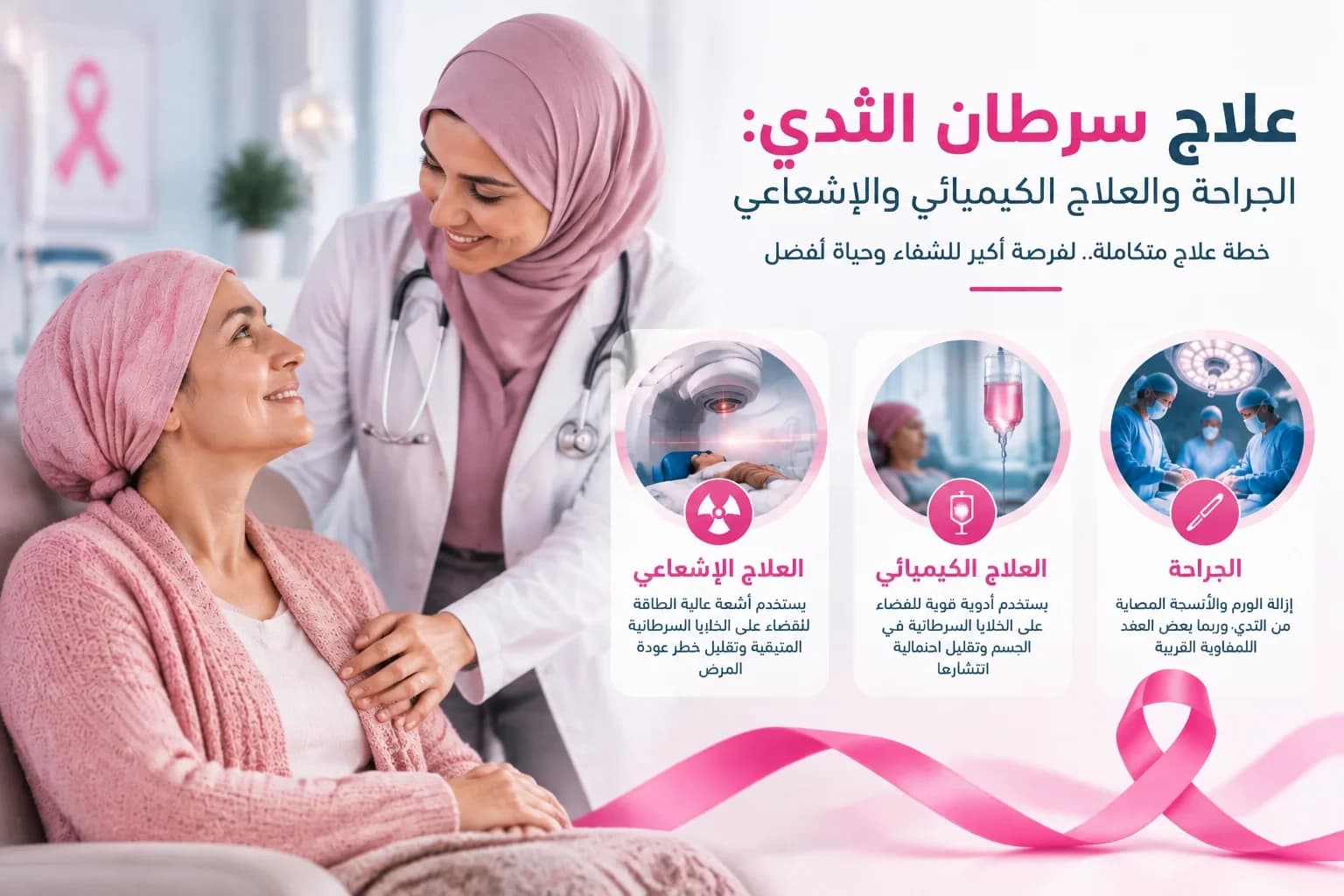
Breast cancer is one of the most common types of cancer among women. It occurs when cells in the breast tissue grow abnormally and uncontrollably. With advances in medicine, breast cancer treatment options have become more diverse and precise. The treatment plan depends on the type of tumor, the stage at which it is detected, and the patient’s overall health, rather than relying on a single approach that suits all cases.
Treatment success largely depends on early diagnosis and accurate assessment of the condition. The most appropriate treatment options are determined by a specialized team experienced in cancer surgery and supportive treatments. The treatment plan may include surgery, chemotherapy, radiation therapy, hormonal therapy, or targeted therapy, depending on the nature of the tumor.
Medical Disclaimer: This article was reviewed by Dr. Alaa Mahfouz, Consultant and Lecturer of Oncology Surgery at the National Cancer Institute, Cairo University, to ensure the accuracy of the medical information provided. The appropriate treatment method varies from one case to another based on the assessment of the treating physician and the necessary medical examinations.
How Is Breast Cancer Treatment Determined?
Breast cancer treatment is not selected based solely on the presence of a tumor. Instead, the doctor considers several factors that help determine the most appropriate treatment plan for each patient. The process begins with a comprehensive assessment that may include a clinical examination, imaging tests, and a tumor biopsy when necessary to determine its characteristics.
The main factors that influence treatment selection include:
The stage of breast cancer and how far it has spread.
The size and location of the tumor within the breast.
The type of cancer cells and their biological characteristics.
The presence of hormone receptors or other factors that affect the tumor’s response to treatment.
The patient’s overall health.
This assessment helps the doctor develop a comprehensive treatment plan aimed at eliminating the tumor, reducing the risk of recurrence, and maintaining the patient’s best possible quality of life.
The Importance of Cancer Stage and Tumor Type in Treatment Selection
Breast cancer treatment options vary depending on the stage at which the disease is diagnosed. Cases detected at an early stage often have a wider range of treatment options, while advanced cases may require a combination of different treatment approaches to control the disease.
Knowing the tumor type also helps the doctor determine how it may respond to different treatments. Therefore, accurate diagnostic tests are an essential step before starting any treatment.
Surgery and Its Role in Breast Cancer Treatment
Surgery is one of the main breast cancer treatment options, particularly when the tumor can be surgically removed. The goal of surgery is to remove the tumor while preserving as much breast tissue as possible when medically appropriate.
The type of surgery depends on the tumor’s size, location, and extent of spread, as well as the doctor’s assessment of the patient’s condition.
Tumor Removal While Preserving the Breast
In some cases, only the tumor can be removed while preserving the remaining breast tissue. This is known as breast-conserving surgery. This option is considered when medically appropriate and is often followed by radiation therapy to reduce the risk of cancer cells returning in the treated area.
Complete Breast Removal and When It May Be Needed
Some patients may require a complete mastectomy, particularly in certain cases where the tumor is large, multifocal, or when breast conservation is not considered the safest option.
The doctor determines the type of surgery after evaluating the details of the condition and discussing the available options with the patient to achieve the best possible treatment outcome.
Radiation Therapy After Breast Cancer Surgery
Radiation therapy uses specific doses of radiation to destroy remaining cancer cells or reduce the risk of recurrence after surgery. It is commonly used after some breast-conserving surgeries and may also be used in other cases depending on the doctor’s assessment.
Radiation therapy helps target areas that may contain microscopic cancer cells that cannot be seen during surgery. The number and duration of treatment sessions vary depending on the patient’s condition and the treatment plan.
Chemotherapy for Breast Cancer Treatment
Chemotherapy is a treatment that uses medications to destroy cancer cells or stop their growth. It may be used before surgery to reduce the size of the tumor or after surgery to eliminate any potential cancer cells remaining in the body.
When Is Chemotherapy Needed?
Not all breast cancer cases require chemotherapy. The decision depends on several factors, including:
Tumor size.
The extent to which the disease has spread.
The characteristics of the cancer cells.
Test and examination results.
The doctor determines whether chemotherapy is needed as part of a comprehensive treatment plan designed to achieve the best possible chance of controlling the disease.
Hormonal and Targeted Therapy for Breast Cancer
Some types of breast cancer depend on hormones for their growth. In these cases, hormonal therapy may be an important part of the treatment plan. This type of treatment works by reducing the effects of hormones that help certain cancer cells grow.
Targeted therapy, on the other hand, uses medications that target specific characteristics within cancer cells. It is used when certain factors indicate that the tumor may respond to this type of treatment.
The appropriate treatment is selected based on the results of the tumor biopsy and tests that determine the characteristics of the cancer cells.
Breast Cancer Treatment in Early and Advanced Stages
Breast cancer treatment varies according to the stage of the disease. In early stages, treatment generally aims to eliminate the tumor and prevent recurrence, while in advanced stages, treatment aims to control the disease, reduce symptoms, and improve quality of life.
Treatment of Early Breast Cancer
When breast cancer is detected at an early stage, the treatment plan may include:
Surgery to remove the tumor.
Radiation therapy after certain types of surgery.
Hormonal or targeted therapy depending on the tumor’s characteristics.
Chemotherapy when necessary.
Early detection can increase the available treatment options and significantly improve outcomes.
Treatment of Metastatic Breast Cancer
When breast cancer spreads to other parts of the body, a treatment plan is developed to control the disease and reduce its impact. This may include different medications or targeted therapies depending on the patient’s condition.
The treatment plan is determined through a comprehensive and ongoing assessment of the response to treatment.
Can Breast Cancer Be Cured After Treatment?
The chances of recovery from breast cancer depend on several factors, most importantly the stage at which the disease is detected, the type of tumor, and how the body responds to treatment. Therefore, a single outcome cannot be determined for all cases.
The earlier the disease is detected and appropriate treatment is started, the greater the chances of achieving better treatment outcomes. Regular follow-up after treatment also helps the doctor detect any changes early and maintain the patient’s health.
Book Your Consultation With Dr. Alaa Mahfouz for Breast Cancer Treatment
Choosing a specialist is an important step in the breast cancer treatment journey, particularly when an accurate surgical assessment or a comprehensive treatment plan is needed. Dr. Alaa Mahfouz has specialized experience in oncology surgery and works as a Consultant and Lecturer of Oncology Surgery at the National Cancer Institute, Cairo University, with experience in managing complex and delicate surgical cases.
If you need a medical evaluation or a specialist opinion regarding breast cancer treatment, you can contact us to schedule a consultation and learn about the options suitable for your condition.
Frequently Asked Questions About Breast Cancer Treatment
What Is the Best Treatment for Breast Cancer?
There is no single treatment that is suitable for all cases. Treatment is selected based on the stage of the disease, tumor type, and the patient’s condition. It may include surgery, medication, or radiation therapy.
Can Breast Cancer Be Treated Without Surgery?
In some cases, medications or radiation therapy may play an important role in the treatment plan. However, the need for surgery depends on the nature of the tumor and the stage of the disease.
Can Breast Cancer Return After Treatment?
Breast cancer may return in some cases, which is why regular follow-up after completing treatment is an essential part of ongoing healthcare.
How Long Does Breast Cancer Treatment Take?
The duration of treatment varies from one case to another depending on the type of treatment used and the stage of the disease. The treatment plan may last for several months or longer depending on the individual case.
Is Breast Cancer Treatment Painful?
The treatment experience varies depending on the type of intervention used. Some side effects may occur, and the doctor can manage and reduce their impact through ongoing follow-up.
